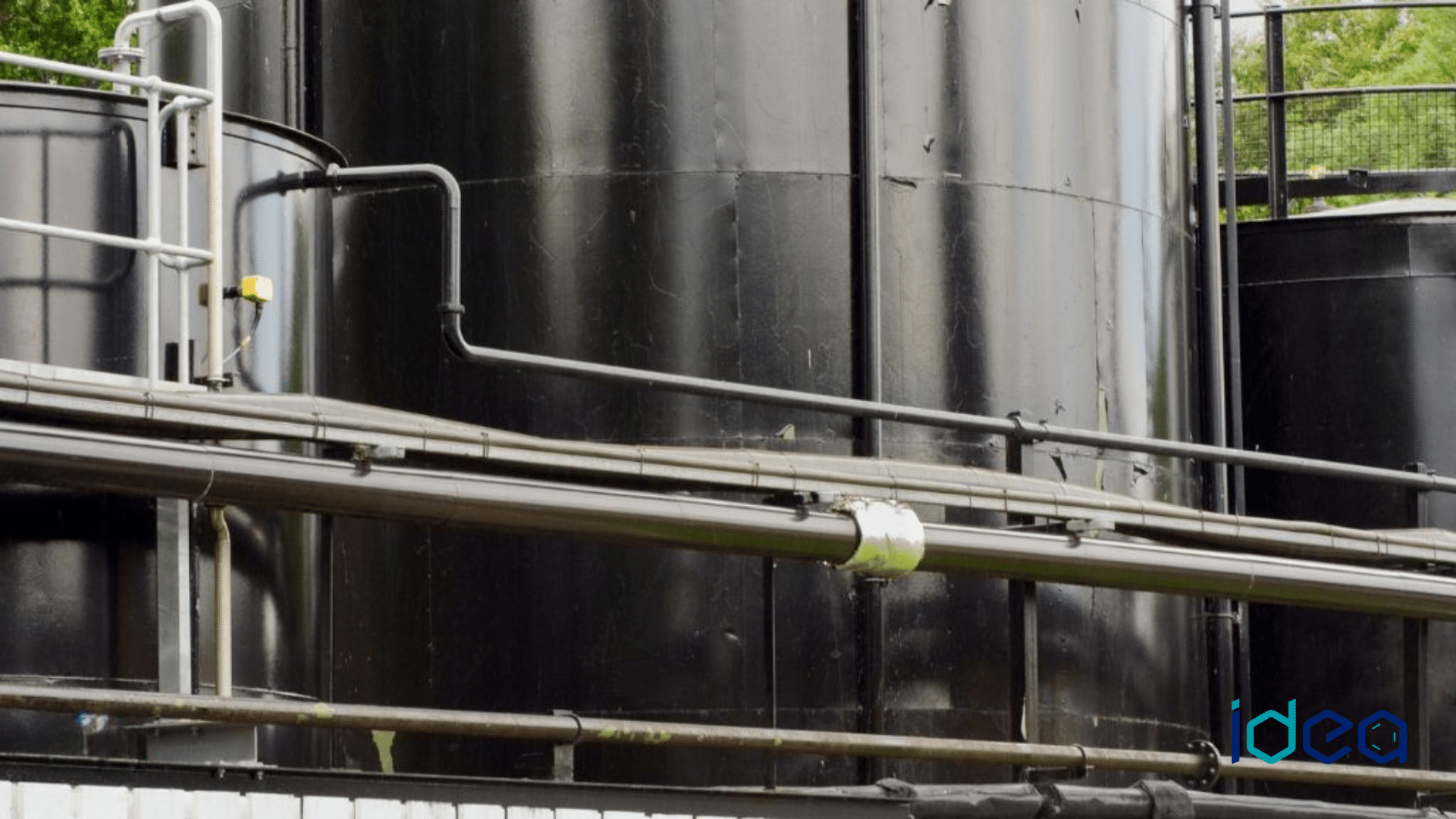
If you have ever walked into a busy whisky blending hall and seen hoses looping over hoses, stretching across walkways and snaking around vessels, you will recognise the moment when flexibility turns into friction. Hoses are useful for moving spirit from A to B without fixed pipework, but as a site grows, adds new tanks or introduces new transfer routes, that tidy setup can slowly become a hose “snakepit” that nobody enjoys working with.
This whisky blending hose routing case study shows how IDEA helped a client reduce the hazards created by complex hose layouts while keeping the operational flexibility that blending teams rely on. The approach was straightforward: start from how operators really work, capture the true routing requirements in a route matrix, and then use unbiased optioneering to compare engineered alternatives such as flow plates and valve matrices before progressing into detailed design.
Client Context and Operational Background
Whisky blending and bulk spirit operations are all about controlled movement. You might be transferring spirit from storage to blending, from blending to packaging, from one vessel to another for conditioning, or routing product for sampling and quality checks. Flexibility is not a luxury here. It is the difference between an operation that flows and an operation that constantly waits.
Why flexibility matters in blending and routing
Blending facilities often need to adapt daily. Different recipes, batch sizes, tank availability, and cleaning cycles can change what route is required and when. Hoses can feel like the quickest answer because they let operators create a route without major construction.
How legacy additions create complexity
But systems rarely stay “new.” Over years, extra vessels appear, temporary routes become permanent habits, and workarounds stack up. The result is a routing network that is technically possible, but operationally messy. This is where risk quietly creeps in.
The Challenge: From Flexible Hoses to a Snakepit
The client’s blending area had gradually become congested with multiple overlapping hose routes. Operators were managing routine transfers using heavy hoses, frequently connecting and disconnecting them around tight spaces, changing levels, and competing priorities.
Manual handling strain and ergonomic risk
Hoses, especially those used for bulk spirit movement, are not light. They can be awkward, stiff, and tiring to manoeuvre. Repeating that handling day after day increases fatigue and the chance of injury. In plain terms, it is like carrying a heavy, half coiled python that fights back every time you try to position it.
Trips, slips, and falls in congested areas
When hoses cross walkways or sit in unpredictable loops, even the most experienced operator can trip. Add wet floors, busy production periods, or low visibility around vessels, and you are stacking the odds in the wrong direction.
Misrouting risk and human factors
The more complex the routing network, the easier it becomes to connect the right hose to the wrong point. Even when people are careful, complexity increases cognitive load. Under time pressure, during shift change, or when routes are rarely used, the risk of human failure rises. In the spirits world, misrouting can mean lost product, quality incidents, or significant rework.
Project Objectives
IDEA supported the client with clear objectives that balanced safety, operability, and long term practicality.
Safety and operability goals
- Reduce manual handling of heavy hoses.
- Reduce trip and fall risk in the blending area.
- Reduce the chance of misrouting and operator error.
- Improve housekeeping and access around equipment.
Maintain flexibility without hoses
The client still needed the ability to route between multiple sources and destinations. The goal was not to lock the facility into a rigid system, but to keep flexibility while removing hose related hazards.
IDEA’s Approach at a Glance
Rather than jumping straight to a preferred technology, IDEA started with what matters most: how the facility actually runs.
Route Matrix Workshops with Operators
IDEA facilitated Route Matrix Workshops with operators and key stakeholders. These sessions captured:
- Required routes and transfer scenarios.
- How often each route is used.
- Typical and unusual operating conditions.
- Known pain points, near misses, and practical constraints.
Data led definition of routing needs
This approach ensured the design basis was grounded in reality. It avoided the classic trap where a system is designed around assumptions and then operators have to invent workarounds to make it usable.
Step 1: Understanding the Real Route Requirements
A common mistake in brownfield upgrades is to design around what exists today without asking why it exists. The workshops focused on the “why” behind each hose route.
Capturing normal operations and edge cases
Normal transfers are only part of the story. The team also considered:
- Cleaning and changeover scenarios.
- Tank outages and maintenance constraints.
- Sampling requirements.
- Seasonal volume swings and production peaks.
Frequency, volume, and constraints mapping
Routes were assessed not just on existence, but on importance:
- High frequency routes that deserved the most robust solution.
- Low frequency routes that might be supported differently.
- Space constraints, access constraints, and isolation needs.
Step 2: Translating Operations into a Route Matrix
Once operational needs were captured, IDEA translated them into a structured route matrix.
What a route matrix is, in plain terms
Think of a route matrix like a map of “what needs to connect to what.” It clearly shows every required source and destination pairing, and any constraints around those pairings. Instead of relying on memory and experience, you create a controlled reference that can be designed, checked, and verified.
Turning tribal knowledge into a controlled system
Operators often carry years of route knowledge in their heads. The workshop process pulled that knowledge into a documented format that engineering teams could use for optioneering and design.
Step 3: Optioneering for Safer, Cleaner Flexibility
With a defined routing requirement, IDEA carried out optioneering to evaluate engineered alternatives that remove hose hazards while maintaining routing flexibility.
Option A: Flow plates
Flow plates provide flexibility by allowing operators to connect predefined routes through a controlled interface. They can reduce hose clutter by centralising connections and limiting where hoses are used. In some cases, hoses may still exist, but in a safer, more organised configuration.
Option B: Valve matrices
Valve matrices provide routing flexibility through a network of fixed pipework and valves. Operators select routes by operating valves rather than physically moving hoses. This can significantly reduce manual handling and can also reduce the chance of incorrect connections if designed with clear logic and safeguards.
Option C: Hybrid solutions
Sometimes the best answer is not pure flow plate or pure valve matrix. A hybrid can combine:
- Fixed routing for high frequency routes.
- Controlled flexible interfaces for rare routes.
- Logical grouping to simplify operations.
The key is not the label, it is how well the solution matches the route matrix and how easy it is for operators to use correctly.
Unbiased Evaluation Criteria
IDEA assessed options using criteria aligned with safety, compliance, operability, and whole life value.
Safety, ergonomics, and human error reduction
Options were evaluated for how effectively they:
- Remove manual lifting and dragging of hoses.
- Reduce trip hazards and congestion.
- Simplify routing decisions and reduce cognitive load.
CAPEX, OPEX, and maintainability
A solution that looks affordable on day one can become expensive if it is hard to maintain or frequently causes downtime. Evaluation considered:
- Installation complexity in a brownfield environment.
- Valve maintenance and accessibility.
- Spares strategy and lifecycle cost.
Cleaning, contamination control, and quality risk
In spirits operations, quality is non negotiable. Optioneering considered:
- Cleanability and drainability.
- Cross contamination risks.
- Isolation and line clearance practices.
Recommended Concept and Why It Won
The preferred concept was selected because it best met the route matrix requirement while reducing the highest risks. The selected approach prioritised routes that were most frequently used and most critical to operations.
Simplifying decisions for operators
The recommended approach aimed to make the correct route the easiest route. Clear labelling, logical grouping, and consistent operating patterns were prioritised so the system supports people instead of relying on perfect memory.
Designing for the real world, not the drawing
Design decisions were influenced by practical operator input:
- Where people stand to operate valves or connect lines.
- How visibility works around vessels.
- How access changes during peak operations.
Step 4: Detailed Design and Deliverables
Once the preferred option was agreed, IDEA progressed the solution through detailed design to deliver a bespoke, buildable package.
Layouts, tie ins, and access
Detailed design included:
- Arrangement drawings and equipment layouts.
- Tie in points and integration with existing systems.
- Access zones for safe operation and maintenance.
Operability and maintainability built in
Design considered:
- Safe valve access heights and reach.
- Clearance for maintenance tools.
- Isolation points for planned and unplanned work.
Documentation for safe operation
Deliverables typically include:
- Updated PFDs and P and IDs where applicable.
- Line lists, valve schedules, and tagging philosophy.
- Operating logic and route selection guidance.
- Commissioning and handover support inputs.
Human Factors and Change Management
A safer engineered system still needs adoption. If operators do not trust it, they will find a workaround.
Making the safest way the easiest way
The solution focused on intuitive operation. If the safest method takes longer or feels confusing, people will revert to habits. The design intent was to reduce decision points and make route selection obvious.
Training and handover principles
Training focused on:
- The reason for change and the risks being removed.
- How to select routes correctly.
- How to confirm routing before transfer.
Outcomes and Value Delivered
While each facility is different, the design intent and expected value were clear.
Reduced manual handling and trip risk
By removing or significantly reducing hose movement, the solution reduced physical strain and removed many of the trip hazards created by hoses across walkways.
Lower misrouting potential
A structured routing solution, designed from a verified route matrix, reduced the chance of incorrect routing by simplifying how routes are selected and controlled.
Improved housekeeping and workflow
Removing hose clutter improves the working environment. Better access around equipment can reduce frustration, speed up tasks, and improve overall site discipline.
Why This Matters Across the Spirits Industry
Hose snakepits are rarely created overnight. They are a slow side effect of growth, change, and operational pressure. That is exactly why they are dangerous. They become “normal,” and normal is the enemy of improvement.
If your blending hall is expanding, if your routes are multiplying, or if operators regularly wrestle hoses in tight spaces, the risk is probably already higher than you think. The good news is that there is a practical path forward: define the real routing need, optioneer solutions fairly, and design something that works for the people who use it every day.
How IDEA Can Help
IDEA supports whisky and broader process industry clients to reduce operational risk while improving flexibility and performance.
Route Matrix Workshops
We facilitate structured workshops with operators and stakeholders to capture route requirements, frequency, constraints, and practical realities.
Optioneering and concept development
We evaluate flow plates, valve matrices, and hybrid solutions using unbiased criteria aligned with safety, operability, maintainability, and whole life cost.
Detailed design to deliver bespoke solutions
We carry selected options into detailed design, producing clear engineering deliverables that enable safe implementation and efficient handover.
Talk to IDEA about running a Route Matrix Workshop and developing an engineered routing solution that keeps flexibility while reducing risk.
If you are dealing with hose congestion, manual handling risk, or misrouting concerns in your blending or bulk spirit operations, we can help you take control of routing complexity.
Conclusion
Hoses bring flexibility, but uncontrolled flexibility can turn into a snakepit of risk. As blending facilities grow and routing needs evolve, manual hose handling, trip hazards, and misrouting potential often increase quietly in the background. IDEA’s approach starts with operators, captures real route requirements through Route Matrix Workshops, and uses unbiased optioneering to evaluate flow plates, valve matrices, or hybrid solutions. The result is a safer, cleaner, more reliable routing system that works in the real world and supports consistent operations.
FAQs
1. What is a Route Matrix Workshop?
A Route Matrix Workshop is a structured session with operators and stakeholders to capture all required process routes, how often they are used, constraints, and operational realities. The output is a documented routing requirement that engineering can design against.
2. When should a facility consider replacing hoses with engineered routing?
If hoses are frequently moved, routes overlap in walkways, manual handling is significant, or there is concern about incorrect routing, it is a strong signal that an engineered solution should be evaluated.
3. Are flow plates safer than hoses?
Flow plates can improve safety by centralising connections and reducing hose clutter, but the safety benefit depends on how much hose handling remains and how well the interface is designed.
4. Do valve matrices remove misrouting risk completely?
They can significantly reduce it, especially when combined with clear labelling, logical valve grouping, and good operating procedures. However, any system still benefits from good human factors design.
5. Can this be done in a brownfield facility without major downtime?
Yes, in many cases. With the right optioneering and phased implementation strategy, engineered routing upgrades can be designed to minimise disruption and align with planned shutdown windows.